The Swing Lo Magellan Theory
What you think about that?
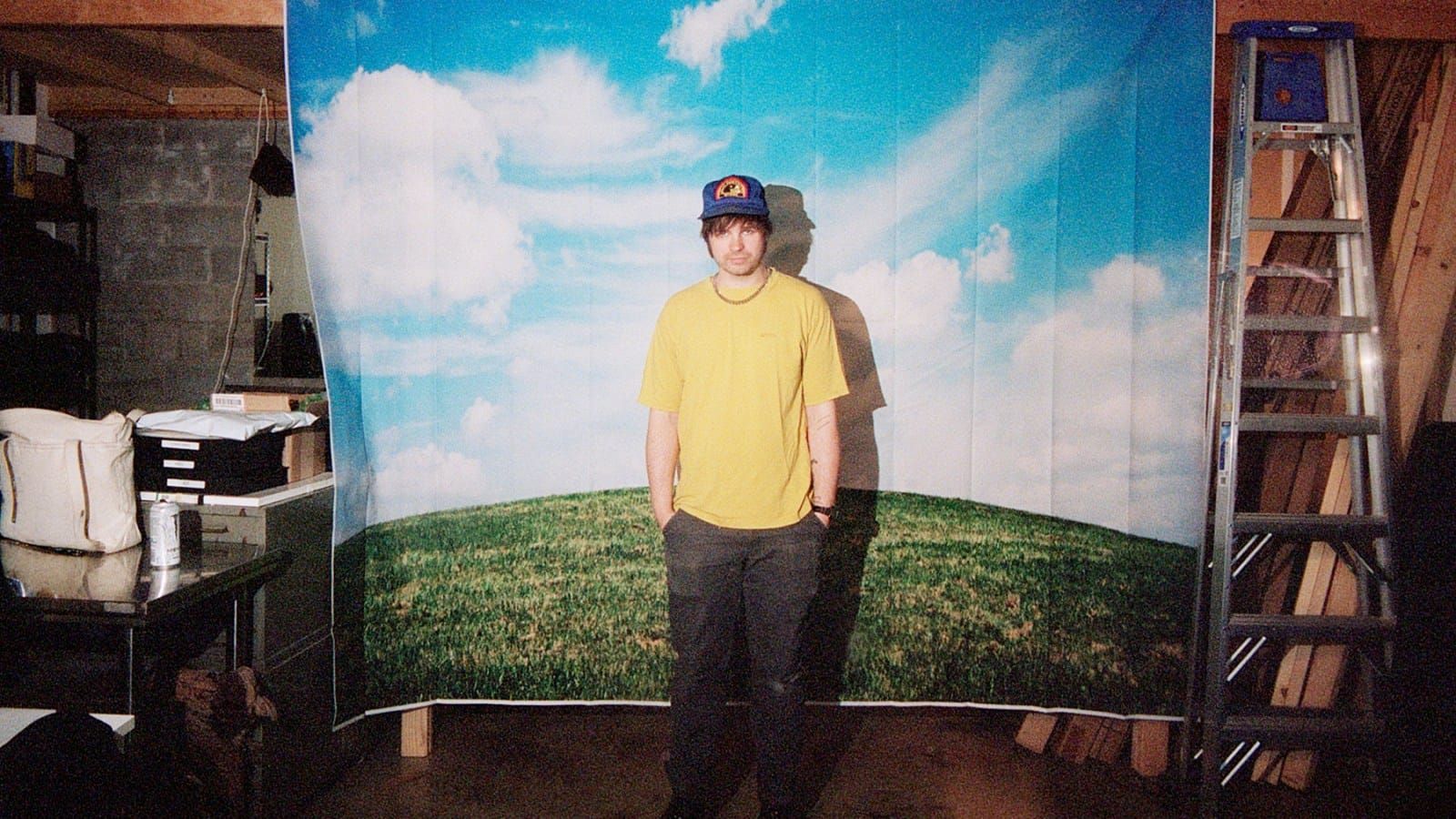
2024 claims two of my favorite records of the decade: Hovvdy’s Odyssean self-titled double-album and This is Lorelei’s malleable Box for Buddy, Box for Star. Both artists released new records this year that struck me as underwhelming on first listen but revealed subtle pleasures with repeated spins.
Chris Molanphy, host of Slate’s essential Hit Parade podcast, coined what he calls the AC/DC rule: when an artist’s first #1 record or the best-selling record of their career follows the record that made them a household name. For many artists, these records tend to be either less memorable or less acclaimed. This is so named because AC/DC’s follow-up to their iconic Back in Black, 1981’s For Those About the Rock, debuted at #1 on the Billboard album charts, a spot Back in Black never occupied despite being certified 27 times platinum.
This principle is useful in understanding chart data, the ebbs and flows of populist artists who make music for everyone, and consumer desires. I’m more interested in charting the ups and downs of quality.
We have qualitative terms for certain releases: Sophomore slump. Mid-career. Old guys still got it. One-hit wonder. Reinvention. We also have ways of setting expectations for a record if it involves Phil Spector, Rick Rubin, Jack Antonoff, or going acoustic/country/gospel.
In the Stan Army era, when every artist’s latest release is either A Certified Classic or a grim “mama let’s research”-inducing sign to reconsider your fandom, gauging the impact of new records and organizing them within a discography is difficult. I asked myself: “What’s a follow-up to the breakthrough that isn’t as good as the breakthrough but also not an embarrassment or a leveling up?”
This is the Swing Lo Magellan principle.
I spent 2009 listening to chillwave, blog rap, and the Brooklyn Big Three: Animal Collective, Grizzly Bear, and Dirty Projectors. All three released breakthrough records that cast looming shadows over their careers. None are my personal favorite.
Animal Collective, on a heater since at least 2004, blinked at the height of their breakthrough run. Live shows were notorious for devolving into free-associating noise jams. Festival headlining sets were marked by Dylanesque feats of creative reinterpretations of their most well-known songs. This m.o. was in line with their outsider roots, a “freak-folk” band that was never supposed to be popular. Geologist has expressed, in my estimation with some regret, that this acclaim and exposure on their timeline as a band led them to “[not] play by a lot of the rules.” As a fan I’d argue the moment became too big for them.
They followed the sensational stopgap EP Fall Be Kind (what do you call the victory lap digestif that’s as excellent as the meal that preceded it?) with 2012’s over-stuffed and over-ripe Centipede Hz, a momentum-stalling mess that was the start of a fallow period. It wasn’t bad; it wasn’t what anyone wanted, either. They’ve found new lanes, and have, across a smattering of full-band and solo records since around 2019, been in a revelatory second act, now firmly in their elder statesmen era. They remain one of one.
Grizzly Bear didn’t let the moment become too big for them because they always seemed like guys who were so deep into doing their own thing they were indifferent to leveling up or even playing music together after a while. 2012’s Shields, the follow-up to their breakthrough Veckatimest, is a pleasurable listen that goes down smooth but is so inoffensive it doesn’t even register as a letdown. By the time of that record’s follow-up, 2017’s Painted Ruins, their window had closed. They haven’t done anything since, although they did go on a semi-reunion tour in 2025.
Dirty Projectors followed their 2009 breakthrough, the heady, genre-agnostic Bitte Orca with 2012’s Swing Lo Magellan. It’s my favorite of the 2012 trio of follow-ups from the Big Three. It’s not a level up, nor is it a regression or a disappointment. It distills what makes the frayed Bitte Orca so memorable into digestible, family-friendly pieces. I was listening to it in the car once and my mom asked if it was Freddy Fender. There are no six-minute pseudo-prog freak-outs; you get the lightly psychedelic title track and “About to Die” instead. No R&B crossover attempts, but you get askewed simulacra of all that with “Gun Has No Trigger” and “The Socialites.” Most importantly, you get gun-to-my-temple my favorite DP song, “Impregnable Question.”
It did not lead them to a vastly wider audience, though it probably shed fewer casual fans than the spiky Centipede Hz or the sleepy Shields did, and its bright pop textures were more en vogue with what was happening in 2012. It got Dave Longstreth in the studio with Kanye a few years later. After a tumultuous personal and creative few years, it certainly led to the difficult, uncomfortably personal reset of 2017’s self-titled record, which has Longstreth attempting a chopped-and-screwed refrain, features Dawn Richard but no Amber Coffman or Angel Deradoorian, and diaries the inner dramas of the band during their 2009-2012 heyday with journalistic and discomfiting candor.
Swing Lo Magellan is a band comfortably in its own lane. No song is longer than four minutes. It’s not a disappointment, disaster, or reinvention. It stubbornly refuses to be anything more than twelve solid-to-great indie rock songs. It’s the kind of record bands used to make as major label debuts, which is to say arguably toned down but recorded with purpose. They also didn’t sell out. It’s what Animal Collective refused to do.
No band can do the same thing over and over for decades (unless you’re the Ramones). Few bands have as interchangeable a one-two punch as the Strokes’ Is This It and Room on Fire, or as stark a fall-off. There are countless bands that arrive, drop one or two great albums, then disappear. This does feel more like a rock band thing rather than a rap or pop thing. You get four people in a room every few years and you have four ways it can go sideways. The Big Three aged out of being traditional bands, and that can be either troublesome or an opportunity to reframe what the name on the spine of the record means.
I’m describing what it means to Have a Career, but how do we think about varying quality ranges, and how perception changes over time for specific records or eras? As I was writing this, Andy Cush’s masterful appraisal of Aphex Twin’s 2001 record drukqs dropped and made an argument for an album that’s been under-written about for 25 years. We have a term for these kinds of records, too: ahead of its time. Most artists, even ones I admire, usually have one or two definitive albums, then lesser stuff that contextualizes the great ones. But it’s a certain kind of artist who, at a consequential moment, deep in their own pocket, riding high on some level of new fame or acclaim, neither shits the bed nor levels up.
This is the Swing Lo Magellan principle, which brings me to This is Lorelei and Hovvdy.
I thought I was clever when I said Nate Amos was one of my favorite songwriters a year ago for his sideways Bandcamp poetry, and then suddenly everyone was saying it. Suddenly Jeff Tweedy was saying it. Suddenly The New York Times was writing glossy profiles about him. Adult-alternative university stations were playing “The Kid with the Crown” every hour on the hour. Smash cut to the 9/11 release of The Singer in My Band. I get through my first listen from the moment I step outside my house through my bus ride to the moment I’m walking into the office. I was struck by how familiar it all sounded.
Amos has released hard drives of music for years, from solo stuff to his music with Water from Your Eyes. (He released an odds-and-ends album as This is Lorelei just last year.) Still, I found myself surprised by a new record so wholly in conversation with his previous music, now more polished and overtly bluegrass-influenced. From things as minor as recurring pieces of favorite syntax (“my guy,” “kid,” “buddy”) to how snatches of his admittedly sublime melodies from a few songs reappear in other songs, it’s a smoothing out, variations on a theme, a codification.
There is one moment of transcendence: “Oh No Now My.” We need a term to describe music obviously inspired by Elliott Smith in a pure, holistic way. The same way we call things “post-punk” or “post-rock.” “Post-Smith” is too generic. “Post-Elliott” is too cute. Naming him entirely is cumbersome. It’s music that breaks down melodies to their cellular structure then animates the essence of rock music since the Beatles into new shapes like a zoetrope. “Oh No Now My” sounds like Elliott Smith fronting Alice in Chains. It sounds like Doug Martsch doing The Cars. It’s foreign and familiar, sturdy and shambolic. I wish there were more songs like it. It’s The Singer in My Band’s “Impregnable Question.”
Hovvdy’s Big World flirts with greatness within its first seven songs. Charlie Martin and Will Taylor are songwriters first, which means Hovvdy as a unit is the sum of its two parts. They have also released a lot of music, but less as lo-fi bedroom pioneers and more as craftsmen perfecting a trade, like Music Row songwriters or rap producers in the studio for 24 hours a day. I sense they relished getting their due in 2024, then packed their lunch pails and clocked back in.
They are genius composers. Everything is always in its right place, but not airlessly or joylessly. Their songcraft is impeccable, like a major league swing or any physical performance perfected into muscle memory. After your second or third listen through Big World, you’re anticipating the next chord progression, the next turn-of-phrase (“graduated from a punk to a hack”), the next bridge. These moments feel like they’ve always existed, which is their songwriting’s magic trick.
Even more so than previous albums, there are Charlie songs and there are Will songs. I came to the band as a Charlie guy but now am a Will guy. Charlie’s songs (“JJ,” “Blast”) unfold gently, sweetly, like skipping rocks on a pond. Will’s songs are more plainspoken but with the charge of a favorite cousin—he’s politely raging on “Try Try Try,” third-beer wistful on “What I Had,” but also the surefooted anchor on my favorite Hovvdy song, 2019’s “(Ruin my) ride.” Charlie is your guy if you grew up worshiping Phil Elverum; Will, Townes.
Hovvdy are still adept at putting their dreamy songs on top of breakbeats, which is an affect of their shared love of rap music. There’s a million worlds where all of this produces the worst music imaginable, and then there’s this one, where it’s some of my favorite music of the last ten years.
The record stumbles after the high point of “Try Try Try,” where the lyrics transition from koan (“all my life/been looking for/what I had/with you”) into Hallmark (“love is just a feeling til you give it away”). It picks up on closer “Wannabe (Radio Queen),” which made me think about Whiskeytown for the first time in twenty years. In the wrong hands, this is unbearable: country-rock in the year of our Lord 2026. But “Wannabe” reminds me of Hovvdy’s two-step emotional climax “Bad News” in how it perfects one musical thought before letting down the curtain. It’s almost a lark, except Hovvdy always mean it. It’s their signature on the back of the canvas. They’re done. Time to clock out.
What I’m reading: Rise Above, Matthew Schnipper
Listening to: Believer, Angela Autumn
Watching: Dark Night of the Scarecrow