Summertime '06
You see how this looks.
Were you alive in 2006? is the most pressing question this year. I was, and this has left me feeling a prosaic combination of old and annoyed, abated by the comfort that this dynamic is as old as human beings ourselves—though before the last century humans were not inundated with this much information, faces, or drama on any given day. First in my bloodline to read this sentence. I see more baddies on my way to work than my great-grandfather did in his lifetime. People have written about this, you’re just 23. Act like you’ve been here before.
The notion that culture returns to its own tail every twenty years is not new or deep but something else is happening: as we move past the monoculture era, it’s novel to look back at any chapter of time and marvel at the dumb stuff people were entertained or enlightened by. There is another term for this, which is chronological snobbery. If we view Obama as the last unifying figure in the American mind, then we are about to approach the end of reflecting back on monoculture as it existed for a century. (Yes Trump but magnifying and creating division was the point.)
Baked into this idea is we have moved past any notion of the common good, although the blue tsunami is a pushback on the idea floated by everyone since 2015 that nothing matters. That is still probably true, but after witnessing a million-plus people die of COVID and capitalism eat itself on a steady diet of stock buybacks, private equity, and the president and his cronies’ insider trading (underlined in recent days by the outage of every electronic piece of hardware designed to keep modern life humming and us siloed from each other), and then being told two years ago that we were powerless to stop this—maybe the dam finally broke.
Trump won by microscopic margins in 2024 but everyone talked about it like a mandate because people find it difficult to think beyond binaries. Stokely Carmichael said America has no conscience, which is true, but I believe, stripped of ideas about patriotism, religion, or tribalism, the average person is more inclined to harmony, and, failing that, stupidity, than evil.

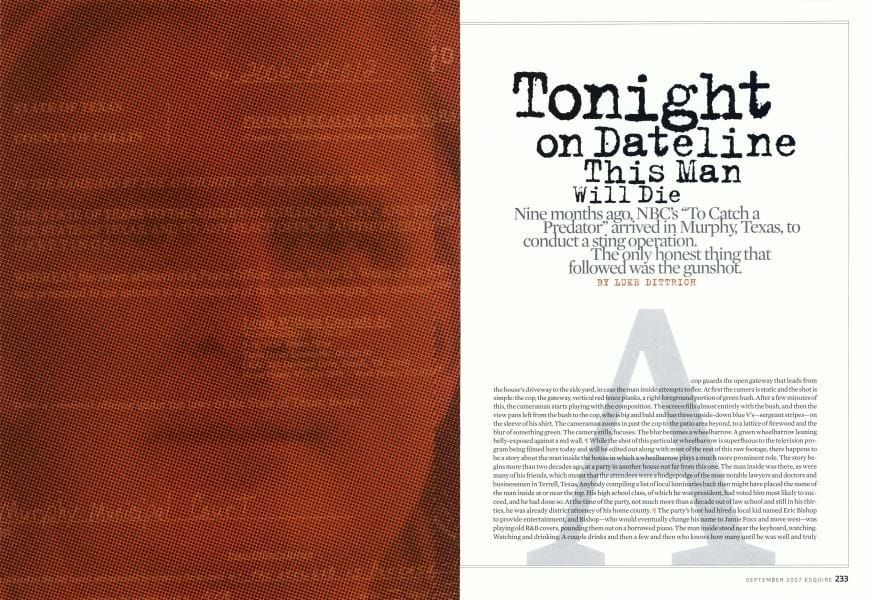
This brings me to Lance Oppenheim’s Primetime, a movie I spent 45 days anticipating then saw and was like, oh, ok. It was overshadowed by Oppenheim’s own You Can See Everything weeks later then Robert Pattinson became James Bond after that, proving on a long-enough timeline we all get dragged into corporate-owned intellectual property. The premise of Primetime intrigued me, because twenty years ago, while I was sentient, millions more were sitting at home watching potential pedophiles get their comeuppance while also reading tabloids exploiting young female movie stars and musicians while also mainlining horrific health advice from daytime talk shows.
This appears dystopic in the age of short-form vertical video where everyone lives inside their own bespoke echo chamber on their first day on earth—but also, I thought this construct was fucked up as it was happening. What if Primetime was the movie that finally diagnosed the 21st-century American urge to finger-wag on one hand while jerking off (metaphorically and not) with the other?
After the trailer dropped Dani and I watched an hour of To Catch a Predator on YouTube before our brains broke. These men were wrong and depraved but also it’s evil to pretend to be someone while encouraging people’s worst, most base desires, filtered through criminality and deviance (a lot of men claim to be seeking therapy when they’re caught, and I believe it, which does not excuse them). Chris Hansen is a ringleader of smug, puritanical white America, but he’s a vessel, not a villain, which is where Primetime stumbles. He’s not that interesting or malicious to hang a movie on, and the movie does not interrogate the larger culture of the time, although the reveal of his hoarding an Indian talisman as a weapon against Western moral impropriety rings mythically true, not unlike a fanboy buying a samurai sword on eBay to put in a glass case at home.
The movie’s world is small potatoes. The moral detritus of the era lives beyond the exploitation of young naïve actors and the death by suicide of a government employee in small-town Texas. It’s Ty Dolla Sign on a rightwing streaming platform carrying Hansen’s mantle twenty years later by “exposing” pedophiles in public. It’s a rotating cast of former reality show cast members filtering through the federal government. It’s the me and what’s good for my pals rot that pissed off enough Texans to flip it blue. (I always knew we would get there; it was a math problem and the demographics finally broke the right way.)
People are sick of this shit. Twenty years ago it was easy to point the finger and laugh at people you thought were beneath you. A historically unpopular lame duck Republican president was leading a futile war in the Middle East. A craven, populist impulse rode its horses all the way to the start of a two-term presidency a decade later. Two decades later it fell apart. I wouldn't bet against America's ability to find new ways to slowly kill its poor. But I’m not sure if I need to be merely reminded of this cycle, especially since, to quote Bomani Jones, we didn’t see it coming, we watched it happen.

John Wilson appeared during the pandemic as Nathan Fielder’s kinder, gentler protegee in a time when we all needed reminders of virtue. My memory of his show, How to with John Wilson, is that it became less impactful as it went on, but I hold him in good esteem as a guy with a unique view of the world. His debut film, The History of Concrete, also got overshadowed by Fielder and Oppenheim’s documentary, but it’s lingered with me as a mild disappointment not because of what it was but because of what it wasn’t.
It does not go deeper than Wilson does with more efficacy in a half-hour HBO episode. It abandoned fertile ground for comedy/tragedy (behind-the-scenes at the Hallmark Channel as Wilson explores funding his film) for a staler premise (tribute band frontman deals with the highs and lows of existence with male Gen-X detachment/fear). A crucial part of Wilson’s appeal is, hey look at this, and aside from a few funny visual gags his movie didn’t show me a lot, and it left me feeling hollow at the end, like Wilson’s blind spots as a straight, white, American man were more apparent than before.
I know—discourse of this type has Left the Building—but the movies my friends and I watched this year had a note of alienating whiteness at their core. A tinge of, “so what?”
The Drama and The Invite were peak kitchen-table movies, movies that are more interesting to think about and ask yourself the question posed in their centers than to sit through. The Drama is better, even good, but it also notably sidesteps any questions about race, gender, or being chronically online, all issues presented by Zendaya’s character’s reveal. The Invite is trying to be Who’s Afraid of Virginia Woolf for the “we’re opening up the relationship” age but is flawed from the start because it’s wholly untethered from reality—for a more nuanced movie about Seth Rogen trying to talk himself into having sex with a beautiful woman you can rent Zack and Miri Make a Porno. Both kitchen-table movies leave me with a feeling of, “so what?”
It’s fun to hang with your friends, in the high of being present with other people, and ask each other provocative questions. But art should be more than a placebo for human interaction, which is what movies and podcasts and streamers and everything has warped into post-COVID. I am socially anxious and hoard a lot of insecurities, trust me, and my message isn’t simply to Touch Grass. We should remind ourselves and experience for ourselves what it means and feels like to be moved or changed by something profound in this world. We are capable of so much more than hey look at this.
This kind of art says, I have removed myself from the thing to point at the thing because it doesn’t touch me. Or, I can look at it but not engage. It’s a privileged vantage point to create art from. I know reality has bent to the will of tech billionaires in fleece vests for the better part of twenty years and that has left everyone unmoored. But art has more impact when it takes accountability for what it’s presenting. When it speaks to or is informed by an incomparable experience. It doesn’t ask you to pass judgment, but it helps you understand real-world stakes.
Not everything should be autobiographical but as an artist you should do more than point at the thing then leave the scene. I don’t think John Wilson is a bad person, but I find it interesting that he shows up to the funeral for an Asian judge of some renown and asks the people there to perform for the camera.
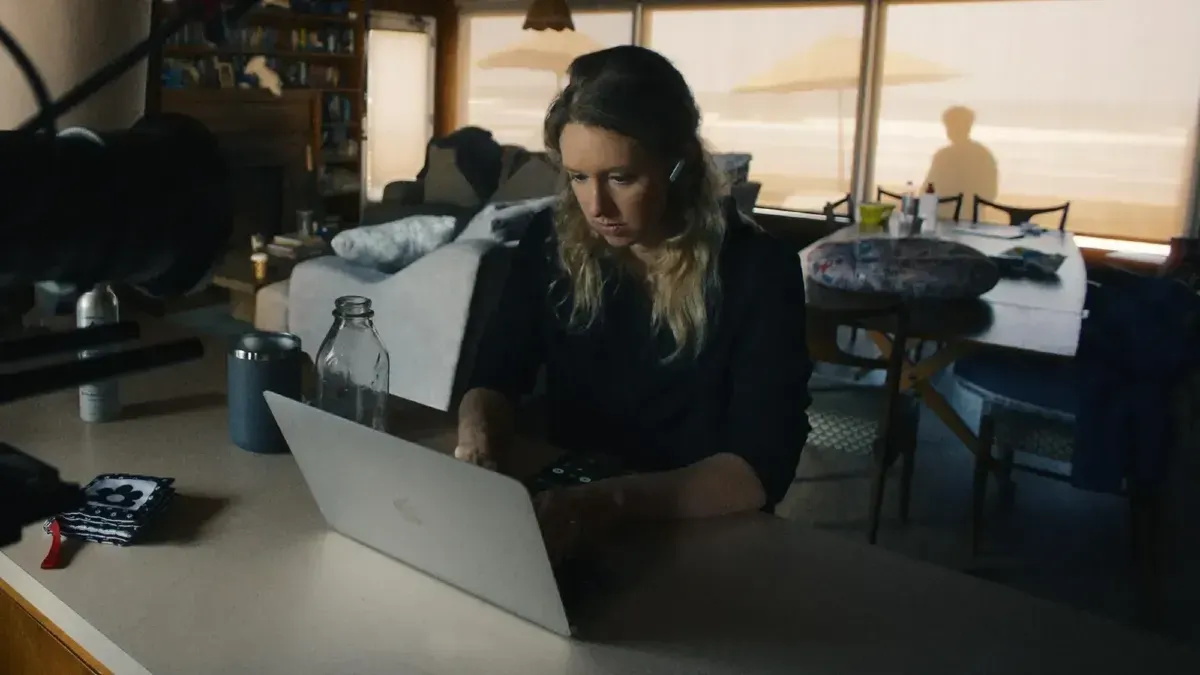
This leads me to Nathan Fielder and Lance Oppenheim’s You Can See Everything. I’ve written about Fielder before and have grown to appreciate him further with every new project he drops, from both seasons of The Rehearsal to his drama-pivot, the now-strangely underrated The Curse. You Can See Everything, from its title down, is literally about: Hey look at this. It goes one step further by asking: What do you think about this? In its back half, it sets out to answer its own question: Here’s what we think about this.
Fielder is an honest and curious thinker, and it’s easily the best of the year’s kitchen-table cinema slate. I did find the game of chicken it plays about whether we (as the audience) should trust what we’re seeing frustrating. I don’t have feelings about Elizabeth Holmes one way or the other. If she scammed millions from the Murdochs and the pharmatech vultures of the world, ok girl period; if her deception was responsible for the suicide of a former business partner and broken promises for people who are suffering, ok twin not too much now. The modern scammer archetype holds no weight for me, and I don’t think the movie buys into it either, which is to its credit.
Where it loses me is when it sidesteps the drama of, Why her? Why now? Why Nathan Fielder?, to probe whether we should trust her intentions with this project and especially the intentions of her partner, a vile tech guy who’s clearly a bullshit artist. This echoes my primary beef with Primetime, which is that Billy Evans is not interesting or deep enough to be the shadow subject of a three-hour documentary about someone I already don’t hold space for.
He’s a wide-eyed dork who listens to podcasts at 2x speed, crudely nudges Holmes and Fielder into unbecoming situations (his forceful presence during the “Who’s On First?” sequence is a more damning indictment vis-à-vis his perspective than the belabored attempt to square whether or not Holmes understands humor), and then goes mask off in a way that felt premeditated (either by him, understanding his role as a foil in a documentary, or the filmmakers, setting up a villain reveal in the [semi-scripted? idk!] kitchen table sequence with Amanda Seyfried) in the final half hour. The world is full of awful people. Not all of them deserve analysis or catharsis, even in comeuppance.
As a fan of The Rehearsal, the movie’s second-half pivot into elaborate reenactment, while entertaining, left me a little cold. If the other movies I’ve mentioned remove the creator from their world, Fielder explicitly makes himself part of the narrative, which deepens our relationship to him and to the movie, and raises the stakes as he navigates his own film, which is its power that keeps you glued to your seat for 180 minutes.
Seyfried has a beguiling screen presence and displays seemingly genuine introspection about her role in influencing the perception of a real person. An interesting aside is the movie’s dismissal of something like The Dropout as prestige stream-slop, which, as someone who’s never watched a second of it, I’m confident in feeling that it is. Forget twenty years ago—we should evolve beyond the pathological need to dramatize the extremely recent past. We can do better than to think to ourselves “when’s the documentary/prestige show dropping?” every time a sensational news story develops.
Fielder explored whether he is neurodivergent in an episode of The Rehearsal, which is key to understanding his big-tent theses on modern life. I can’t and won’t diagnose a stranger, but the fact that he’s made a career out of recreating or lightly altering reality to better understand it speaks for itself. Making a documentary about someone synonymous with deception would be a tricky disposition for anyone, let alone someone with Fielder’s background and résumé. This is the crux of the movie, and it spends a lot of its runtime exploring this idiosyncrasy.
The dead-end that always arises for me is “is this real?” only goes so far. OK, “what is reality?” OK, “how well do we ever know someone?” What do we gain from simply asking the questions? The drama is in watching Holmes prepare herself for prison, the way her parents uncomfortably contort themselves in Fielder’s presence, how Seyfried comes to terms with complicating her understanding of someone she thought she understood perfectly. Isn’t acting, and creating, essentially asking yourself how do I make the unreal real. The unknown known. Isn’t everyone’s interpretation of reality a little different, and isn’t that interesting. Will this matter when the bombs start falling?
As the movie expends a lot of energy asking us to ask what is real, it does zero in on a few emotional truths: Holmes probably lied about asking for money for the documentary. Evans is probably not a good guy, define that as you wish. As someone with a person close to me who spent time in the exact same prison as Holmes in Bryan, Texas—prison is cruel, inhumane, and exploitative.
Most crucially, it became clear in the final ten minutes what Holmes’ entire “deal” with Billy is: they are two freaks who found each other. He blinks a lot; she never does. As the two of them profess their love for each other and say things about soulmates, etc, the banal truth expressed banally by two aging millennials is simply that these two crazy kids love each other. I don’t like them, I don’t want to spend any more time with them, please let me use the restroom I’ve held it for three hours.
Whether or not history repeats itself or just rhymes (her partnering with an ethically questionable man for a dubious health tech venture), the more universal truth is there probably is a “person” out there for everyone and if you’re deceitful and a bad hang your soulmate probably is too. Love cuts through the noise and while on a human level I don’t like that Holmes is incarcerated and separated from her children on another level this experience is not super unique to her and there are people experiencing worse living conditions for lesser reasons. I’ve seen everything and honestly I’ve seen enough.
What I’m reading: Cotton Candy on a Rainy Day, Nikki Giovanni
Listening to: Melodie, Slow Pulp
Watching: Crawl