Encounter with the world of cinema
Your being manipulated.
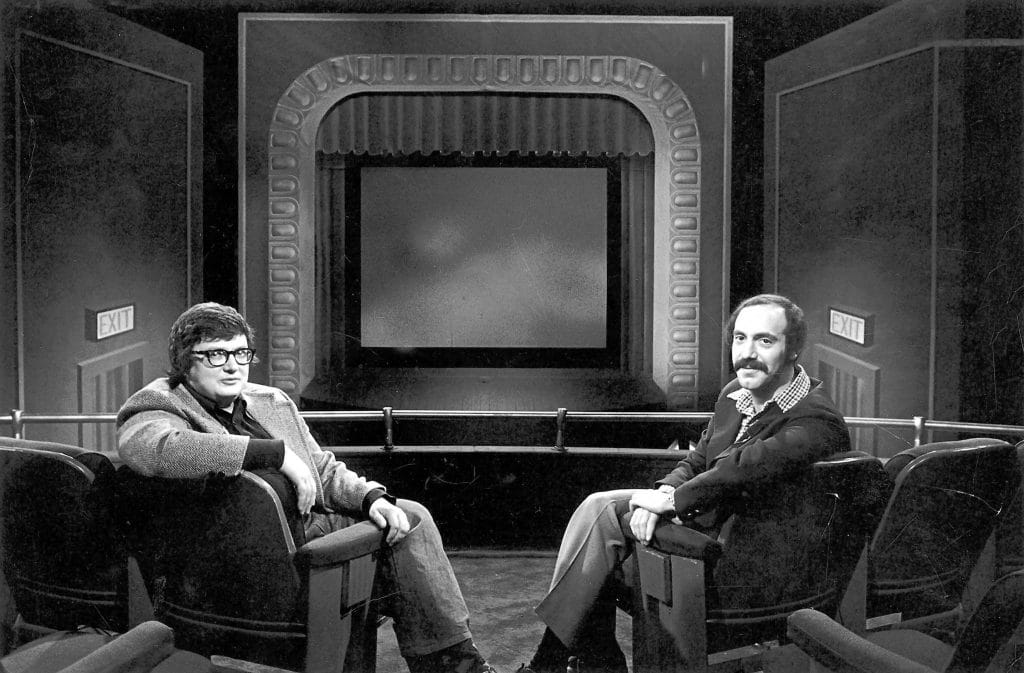
Pope Leo XIV recently revealed himself to be a cinephile (sorry, Walker Percy). After praising D.W. Griffith (woof), he said movies “articulate questions that dwell within us.” He likened theaters to thresholds—crossing from light to dark heightens the senses. He said they are “the beating hearts of our communities because they contribute to making them more human.” Everywhere people are telling us to remember our shared humanity and not be siloed in front of screens. But what if screens are offering reflections of ourselves immersed in screens back to us?

Eddington
A tweet I remember after Midsommar dropped said “Ari Aster is talented but what he knows about grief could fit on a pin.” This clocks him and an entire class of professional filmmakers. After the nineties Sundance explosion and the ‘00s period when everyone’s calling card debut led to a dubious major studio/comic book backwash project, there now exists a group of guys among the most proficient filmmakers ever due to a confluence of time, class luxury, and technology. They have been able to make the things they want to make. They may not have incredible insights, but we can’t ask for more from comfortable people.
Even the best movies lack the intellectual rigor of books or music; it’s not about how deep they are but how compelling is the vision. Is it grounded in reality, myth, politics, emotion, or is it nonsensical whimsy. What a privilege it is to invite people to your spiritual journey.
Eddington is a folktale that takes place during covid. What Aster presents as summer 2020 has nothing to do with probably how you and I experienced it; his vision lays elsewhere. His strength remains his ability to draw lofty themes in neon. Aster’s movies aren’t subtle but all of them give me things to think about. He exposes his weaknesses when he wants to go deep but his oedipal comedy (Beau is Afraid) and now his western are more successful because they are less philosophical, more visceral.
Eddington’s masterstroke is its framing device: by centering the story around the town’s decision to open a data center that siphons water and electricity from a desert, the tussle reinforces the movie’s thesis that the internet has permanently altered our perception of reality. This is less a movie about covid, racial justice, and facemask wars, and more about how folks have voluntarily opted into experiencing a different reality at the expense of everything else. Everything that happens in Eddington is a result of letting the elephant into your house.
Aster was born in 1986 which makes him a millennial, but he gives Xennial (not in a Sean Baker way). The movie’s portrayal of cultural whiplash is indicative of a type of person who never considered pronouns, land acknowledgments, or “sitting down and listening” until 2020. A certain type of well-meaning person looked around that year and thought all the white 20-year-olds speaking the same way sounded insane. Everyone saw democratic senators kneeling in kente cloths and knew they were insane.
Friends had issues with the movie’s portrayal of “antifa” but Aster is thinking less in didactic terms, more mythical ones. Aster poses his dolls before pulling the string and letting them play. He doesn’t think antifa is a terrorist group, but he thinks it’s funny to imagine stealth antifa ninjas patrolling downtown like a gang Clint Eastwood fights. Sadly, it is funny, because the only place we’ll see that level of coordination among left-wing radicals gunning down cops and racist sheriffs is in fiction. And because Aster demonstrates neither an emotional or political alignment nor objection to them, it doesn’t register as MSNBC liberal wet dream wish fulfillment or misplaced anti-woke fantasy.
We know Austin Butler’s character is a new-age conman creep, do we need to know every detail as to how he grifted his way into the new-media wellness space? Does it make the movie better if Aster acknowledges he has the same algorithm as us? He certainly knows who Kyle Rittenhouse is (again, not in a Sean Baker way). Of the movie’s goals, he said this:
“I’m desperate for work that’s wrestling with this moment because I don’t know where we are…I have projects that I’ve been planning for a long time. They make less sense to me right now.”
The pandemic changed everything and we moved past it as if it were a regrettable jean trend. It’s dictating the rest of this decade. It’s the reason we have another round of the child rapist in office. The administration is undoing the 20th century because they saw it as an opportunity while we saw it as an inconvenience. I was not naïve enough to think we’d live the summer of 2020 forever. But I thought the reset would shift the aperture. Instead it was the reset they had been dreaming about.
When we flash forward to the grand opening of the data center and the movie ends on a stunning Bobbie Gentry needledrop, Aster ties the bow on his fable, suggesting even after we made it out we chose to doom ourselves because of greed and the love of our own voices above all others. We’re such genocidal self-sabotaging freaks we’ll trade happiness for power even if we’re comatose. The message isn’t smug, self-incriminating, or finger-pointy, it’s tragic. We built fences and walls and borders and courtyards and when there was an opportunity to think about reconfiguring them even just once we doubled down and built more fences and walls and borders and courtyards and prisons.
Bugonia
Spoilers.
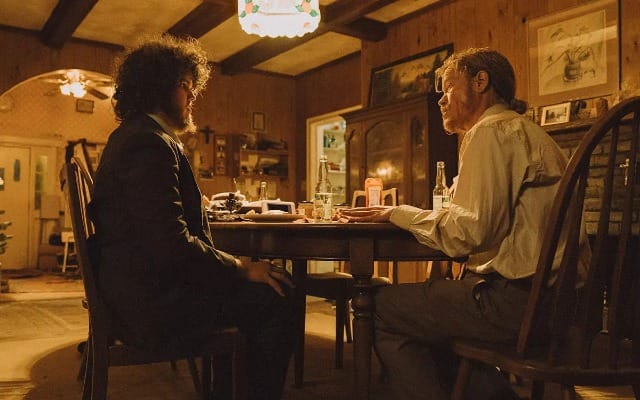
Yorgos Lanthimos has become the O. Henry of middle-brow sci-fi-adjacent arthouse. Bugonia works as his most straightforward movie, at least since The Favourite. It’s entertainment; I could see myself putting this on for my parents at Christmastime if we’re feeling “weird.” However, I can’t shake the feeling that it’s small. My dream is Yorgos goes Grindhouse and we get a four-hour cut of Kinds of Kindness that includes this as a chapter. Watching his stories Lazy Susan-style would fit both the content (arch, upsetting) and the amount of time they should be (short, keep the damage cleaner).
I had an idea of what this was about but didn’t know it touched on being habitually online, conspiracy rabbit holes, 4chan-esque brainwashing, and other ripped-from-the-headlines keywords. Bugonia does an excellent job—or rather, Jesse Plemons and his partner, Aidan Delbis, are excellent—of showing us how two damaged guys (or maybe it’s one damaged guy and his compatriot) could convince themselves of their perceived reality (Emma Stone is an alien) and act on it. Without getting heavy-handed, we see in flashbacks Plemons organizing his former blue-collar coworkers and how the wreckage of the small town they live in could prime them for a conspiracy-driven kidnapping. It illustrates how basic needs drive politics.
People can become radicalized through a few missed paychecks or too many hours alone online. (A misstep is when Plemons lays out his plan to Stone—he says he tried all political identities, which I don’t think speaks to lived experience but does speak to how a non-American could view American radicalization.) When the movie falters it’s when it reaches a level of we get it that becomes hard to ignore. We get it: Plemons is broken, our information ecosystem is broken, high-powered CEOs are ungraceful tyrants espousing pro-diversity cliches. We get that he’s into weird stuff—we saw him sterilize himself in the opening minutes. But it becomes repetitive, and the [spoiler] reveal of the “murder basement” sucks some of the humanity out of his character. Plemons is so good he gives the movie perhaps unearned pathos but then it pulls the rug out from under him. I felt taken for a ride, but the alien designs in the final 15 minutes were funny. I wished Yorgos would go full horror-movie with it but he’s too bashful to commit to full-on terror, at least not without tongue in cheek.
Bugonia is closest to the apex project he’s been working toward his whole career—a demonstration of people in the margins (but who are not marginalized) fucking up over and over to increasingly grim results—but a masterpiece eludes him still. When the climax comes the movie feels exhausted because it’s written itself into a corner. The only way for it to end is how it would always end, which is to say suddenly and without mercy. Perhaps too cute, but I can’t say I wasn’t moved. We all gotta die.
One Battle After Another
My feelings have yellowed and warped on this movie, unveiling the core truth of most Paul Thomas Anderson movies: flashy, hollow. While gesturing at a number of things (here, it’s leftist American politics; elsewhere, it’s been facile ‘70s oil-crisis nostalgia or Charles James/L. Ron Hubbard fan-fiction), PTA isn’t an intellectual artist, so his movies don’t hold up to real-world scrutiny. That’s fine, in a vacuum. Movies can also be fun, which his often are. The problem is he keeps playing in sandboxes that reveal how limited his thinking is.
My deeper, headier objections to this movie were handled in this Defector piece. While it comes on strong, I agree with the sentiments. If a movie about political revolutionaries doesn’t have coherent politics, it’s fine to take issue with it.
It’s not a tall-tale, sci-fi yarn, or horror story—it opens with organizers emptying an immigrant detainee center and ends with an assassination attempt on a Flynn/Hegseth archetype. While I haven’t read Vineland, I trust Pynchon’s fictionalization of post-civil rights hippie burnout through the Reagan era had more between its ears than this movie, which never references “Occupy Wall Street” or “Obama” or “Trump” or “COVID” while taking place between 2008 and 2025.
I am tempted to quote the substack piece that posits the movie reflects beliefs most people would agree on which makes it a refreshing piece of art: racism is bad, pronoun-preferences may be annoying to some but are harmless, children should be protected. But it’s too neat, explaining away concepts the movie floats only to sidestep. I don’t need—or want—a primer on leftist politics from PTA, but if you bring things to the table they should have meat on the bone. The difference between Eddington and this movie is the former is a fable and this one wants to present a version of our current reality with plausible deniability. The scariest person in the movie is literally a former Homeland Security agent. PTA invites verisimilitude he felt would improve his story and it’s worth asking why.
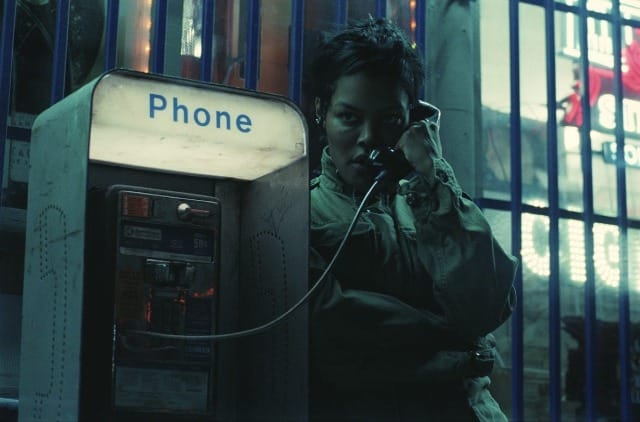
It’s an entertaining movie with car chases, shootouts, a moving father/daughter story arc, terrific performances from Benicio, a truly hilarious Leo, a riveting Teyana (in all of her twenty minutes onscreen), the Support the Girls reunion of Regina Hall (in all of her fifteen minutes) and Junglepussy (in all of her five), Chase Infiniti, et. al. On those terms, it’s great entertainment, four out of five stars, his most fun watch since Boogie Nights. But on another level, its divestment from the “moment” has the effect of chasing Glenfiddich with flat room-temp zero-calorie soda.
Re: Benicio, he’s the best part of the movie because of the strength of his powers as an actor, but also because the movie takes its time in fleshing out who he is (“sensei”), who he loves, and it lets him dance (“a few small beers” and so forth). The long take where he introduces everyone in his house to Leo is the movie’s most powerful sequence because it is informed by hard reality, not fantastical theoretical displays of guerilla activism.
One Battle After Another suffers from a number of unforced errors: it disappears its most interesting character 45 minutes in, devotes large chunks of time to amusing but weightless concepts like the white supremacist Christmas Adventurer’s Club (who, guess what, don’t think Sean Penn is racist enough to be in their clique), ends on a fantasy of the rats turning on each other (see also Brooklyn Dad Defiant-type liberals cheering on MTG in real life), contains a deus ex machina in the form of a bounty hunter having a sudden attack of conscience, and sets up a too-long outro that exists as a “funny” kill scene. These choices reveal the faulty screws, nuts, beams, and bolts at the core of its structure that prevent it from being a fully satisfying movie.

Weapons
Weapons (bad title) is clearly worse than writer-director Zach Cregger’s debut, Barbarian, because it operates on way too many levels. Barbarian is a 90-minute masterclass in simplicity, and many rewatches later is still a joy in splitting an idea into two parts then stitching it back together.
By taking the opposite tack—two-and-a-half hour runtime, Rashomon perspectives—Cregger attempts to stretch his yarn into transcendence, but his ambition fails. Weapons would be better if it was told linearly, chronologically. It would keep him honest about what each character is supposed to be, similar to how Barbarian sets us up to believe specific things about each character before pulling the rug to render its impact memorable.
The redeeming function of this narrative device is it personalizes an event that would be horrifying in real life (the sudden disappearance of a classroom of children) and immediately false-flagged. It’s a reach to see anything overtly political here but the heightened emotions of our time beg for it (and Cregger invites it in the dream sequence with the floating gun). “Save the Children” is a rightwing dog-whistle until you name the missing kid. Crawling into these characters’ heads for six chapters captures that.
“Save the Children” is a unifying call for conservatives that use children as a weapon to wage war on ideas they don’t like as well as cynically appeal to the most base instinct of, well, protecting children. Like most conservative totems, it is another example of “every accusation a confession,” through the reveal—over years, but especially right now—that the world is run by an oligarch class of pedophiles human trafficking children on behalf of a genocidal state because their wealth and gross depravity left them with nothing else to do. Their inhumanity was laundered through private jets, private islands, literal royalty, letters and emails, and so much more horrifying yet trite shit revealing of the true character of this nation and the elites of the 20th century.
At its best, Weapons humanizes any number of mass media tragedies. It dramatizes how pearl-clutching about children fails as policy, as call-to-action, as anything more than virtue signaling. When it hits this register, it can be quietly moving, most notably through Josh Brolin’s character arc and the final chapter about Alex, the only child left behind.
Most often it spins its wheels, teasing us with a variety of ideas it doesn’t mine deeply. The witchcraft stuff is intriguing but based on archetypes as hoary and old as Rosemary’s Baby. That movie’s ideas about aging are integral to the demonic possession at its center, an acknowledgment that evil is always evolving, whereas Weapons dips its toes into ageism (Amy Madigan is excellent, however) and misogyny as a foul side effect of “a witch did this.” I say that not as a lib-scold killjoy but more to say if the theme of children as pawns was more coherent it could have touched a deeper nerve, not simply leave us with “an old witch did this.”
Barbarian similarly touched on issues—gentrification, MeToo, cancel culture—but it played with those ideas so its “monster in the basement” reveal was grounded in real-world horror. Here, these ideas of “Save the Children” and gun control and witch-hunting (literally, and metaphorically [antagonizing the single, independent, professional woman]) point toward a heavier movie Cregger wants to make (he has stated the movie is inspired by grieving his former creative partner and friend Trevor Moore) but is too clumsy to pull off. These implied crises don’t benefit the “witch is hiding children in the basement” rug-pull, instead they complicate and bog down what could have been a tighter movie. I still look forward to whatever he does next.
What I'm reading: Ararat
Listening to: 1985: The Miracle Year
Watching: Rachel Getting Married